
CO₂ refrigeration systems by RMC
The modern refrigeration industry is undergoing a fundamental transformation driven by both environmental requirements and economic factors. The gradual phase-out of hydrofluorocarbons (HFCs) and tightening international regulations are stimulating the transition to natural refrigerants, particularly CO₂ (R744).
Evolution of refrigerants: from CO₂ to HFCs and back
Historically, CO₂ was one of the first refrigerants (patented in 1850), but since the mid-20th century it was replaced by synthetic substances (CFCs, HCFCs, HFCs) due to ease of use.
However, several international regulatory documents have since promoted a return to natural refrigerants, including:
- Montreal Protocol (1987);
- UN Framework Convention on Climate Change (1992);
- Kigali Amendment (2016).
In 2023, Ukraine ratified the Kigali Amendment, aiming at a gradual reduction of HFC use in compliance with EU requirements and climate change mitigation.
Legislative pressure: a driver for cooling solutions
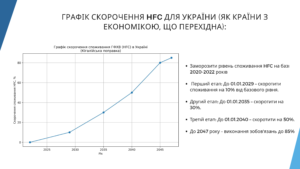
HFC production and consumption are to be reduced by 80–85% by 2047.
Key restrictions include:
- Import quota system for HFCs.
- Gradual reduction of supply volumes.
- Ban on high-GWP refrigerants (limit currently ≤150).
- Mandatory certification of personnel.
- Strict recovery and recycling requirements.
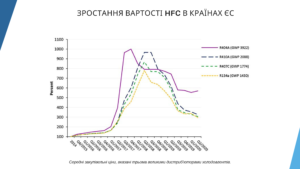
As a result, HFC equipment will become more expensive and less available.
Reduction Plan for Ukraine:
- Freeze baseline at 2020–2022 levels.
- −10% by 2029.
- −30% by 2035.
- −50% by 2040.
- −85% by 2047.
Designing new HFC systems is strategically risky due to future restrictions.
Growth of the CO₂ market
The number of CO₂ systems worldwide has increased sixfold in the last 5 years.
Most active sectors: retail, logistics, industrial refrigeration
CO₂ TC Stores Growing Globally (August 2017)
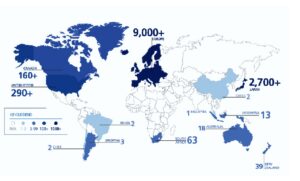
Transcritical CO2 Installations in Major Regions (December 2022)
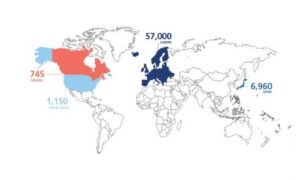
Strategic decisions for Ukrainian businesses
1. Natural Refrigerants (R717, R744, R290)
Key advantages:
- High environmental friendliness (minimal or zero impact on the environment).
- Increased energy efficiency in properly designed systems.
- Low and stable refrigerant cost.
Technical limitations by type:
R717 (ammonia):
- toxicity;
- restrictions on facility placement and design.
R744 (CO₂):
- high operating pressures;
- increased design requirements and system complexity.
R290 (propane):
- high flammability;
- limits on maximum charge.
2. Hydrofluoroolefins (HFO): characteristics and limitations
This group includes refrigerants such as R1234yf, R452, R513, R32, and R454, which are considered a transitional solution between traditional HFCs and natural alternatives.
Key advantages:
- Non-toxic, which simplifies operation.
- Thermodynamic properties similar to HFCs, making it easier to retrofit existing systems.
Main disadvantages:
- Mild flammability (A2L classification).
- Limitations on maximum charge.
- Increased safety and design requirements.
- High refrigerant cost.
3. HFC with GWP < 1500: current solutions and limitations
This category includes refrigerants such as R134, R448, R449, R32, R410, and R407, which are currently widely used in refrigeration and air conditioning systems.
Key advantages:
- Proven and well-known technical characteristics.
- Extensive operational experience and service support base.
Main disadvantages:
- Gradual phase-out in accordance with international environmental regulations.
- Market shortages due to quota restrictions.
- Steady increase in refrigerant costs.
- Strengthened control over usage by regulatory and local authorities.
Transition to CO₂ is not a trend, but a necessity for long-term projects.
RMC equipment complies with global environmental standards and European quality certifications.
View certificates here
The RMC product range includes the following CO₂ refrigeration systems:
- ALPS Compact CO₂ compressor-condensing units;
- OLIMP compressor stations:
Application areas:
- supermarkets and convenience stores;
- storage chambers for fresh and frozen products;
- food industry and processing facilities;
- warehouse and logistics infrastructure (cold chain).
For cost estimation or to place an order, contact us:
 +380 67 186 90 00
 m.kolyadka@rmc-ukraine.com.ua